Sustainability is no longer a nice to have but a crucial part of operating a business and environmental, social, and governance (ESG) reporting requirements. In a high-volume catering service management business setting, food waste creates operational pressure and increased waste removal costs. We continually assess innovative ways to reduce our carbon footprint and handle food waste well, and actually, one of our favourites is one of the oldest: vermicomposting.
What is Vermicomposting?
Vermicomposting is the process of using worms – usually red wrigglers – to break down organic matter like food scraps and paper. The result? Vermicast: a natural, nutrient dense fertiliser that improves soil aeration, texture, pH levels, and water holding capacity, making nutrients more available to plants. And replaces synthetic, petroleum-based fertilisers.
Why does this matter for sustainability?
It’s a common misconception that food waste in a landfill simply returns to the earth. But because landfills lack oxygen, food breaks down anaerobically. This process releases methane, a greenhouse gas significantly more potent than carbon dioxide.
In contrast, worms process food aerobically, which drastically cuts those harmful emissions.
The scale of the problem in Australia is significant:
- Overall, Australia wastes over 7.6 million tonnes of food annually, costing the economy roughly $36.6 billion. (FIAL, 2021)
- Of this, the hospitality sector is responsible for about 1.2 million tonnes of that waste, and the institution sector for about 251,000 tonnes.
- And then there’s the cost of this to businesses. On average, a single foodservice business can lose $66,740 annually to food waste, yet only 23% of businesses regularly audit what they throw away to rectify that. (McGrath, 2021).
As a contract catering company operating across both hospitality and institutional sectors, we believe it’s crucial to tackle these numbers from two angles: preventing waste and responsibly diverting what remains with vermicomposting.
Bringing vermicomposting to commercial kitchens
While it might seem counterintuitive to introduce creatures into a professional environment; however, this program is clean, odourless, and highly effective. Plus, the worms are outside, and bring lots of interest to students and residents on site for a full community engagement.
Here’s how we as a contract catering company can integrate this into your food service environment, through:
- Smart waste segregation
- Onsite worm farms
- Team collaboration
- Community engagement.
1: Smart waste segregation
Worms require specific diets. As such, success starts at the bin. We implement a clear sorting system to ensure that only worm approved items – like cardboard, coffee grounds, and uncooked vegetable scraps – make it to the worm farm. Other waste is appropriately sorted for local council/shire recycling programs to further enhance sustainable waste management initiatives.
2: Onsite worm pods
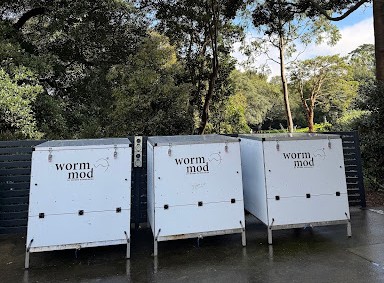
Modern worm farms use modular compact pods which can easily be placed near dining halls or kitchens due to their small size and lack of odour. Their 50 litre tanks are easy to clean, and they work on a continuous flow through system to allow for easy collection of vermicast from the bottom.
3: Team collaboration
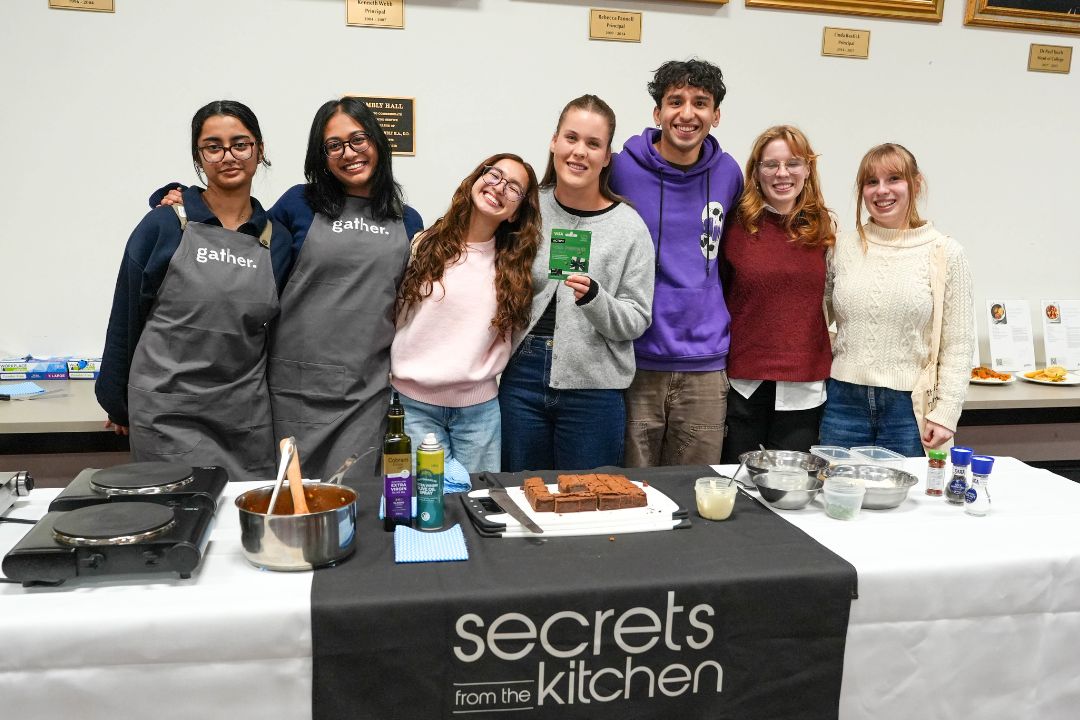
We’ve seen that programs like this bring teams together from all over the site. Catering, cleaning, maintenance, gardening – everyone gets involved to make sure worms are thriving, even during school or business holidays.
4: Community engagement
And it’s even better when programs can go beyond just the environment stats. Vermicomposting turns an invisible environmental goal into a tangible, living project that people of all ages can get excited about. We’ve seen students, staff, and residents come to see the pods wanting to learn about them, resulting in long-term behavioural changes in how they view waste and engage with sustainability.
Vermicomposting benefits at a glance
Reduced waste costs
Landfill levies in Australia are often based on weight.
By sending food waste (which is heavy due to high water content) to worm farms instead of to landfill, the most expensive part of the waste stream is reduced.
Having less food waste means fewer trucks needed, which decreases pollution and its carbon footprint.
Natural fertiliser
Having the worms turn unwanted food into vermicast replaces synthetic, petroleum-based fertilisers. In this case, it’s not just about saving money on buying bags of compost or soil (though you will!), but also about the health of your site’s soil and the pride of using your own natural fertiliser.
Low-impact operation
For sites particularly mindful of their energy consumption, passive vermicomposting is a high-value option. It functions continuously without mechanical input or electrical power, offering a streamlined, set-and-forget alternative for waste management.
The vermicomposting benefits translated into waste being reduced by one third at one of our education sites. As well as:
- Zero energy consumption, as worm farms don’t require energy or power.
- A circular economy where kitchen leftovers are turned into high-quality plant food for on-site gardens.
- Students engaged and influenced to value/understand sustainability initiatives.
A balanced approach to sustainable food service
Many different methods of waste management can raise the level of sustainability initiatives and ESG outputs at your site. But successful sustainable waste management must find the right balance between cost, efficiency, and environmental responsibility, and it varies for each sector and school.
So when you’re outsourcing canteen services and managing large-scale facilities, you want to know the company you partner with can walk this path with you. And we happily recommend vermicomposting as a simple, effective way to turn yesterday’s leftovers into tomorrow’s plant food. Contact us to discuss the methods that would work best for your organisation.

To find out more, get in touch with David O’Brien to have a quick chat about how gather can provide your students and residents with a well-rounded and connecting mealtime experience.